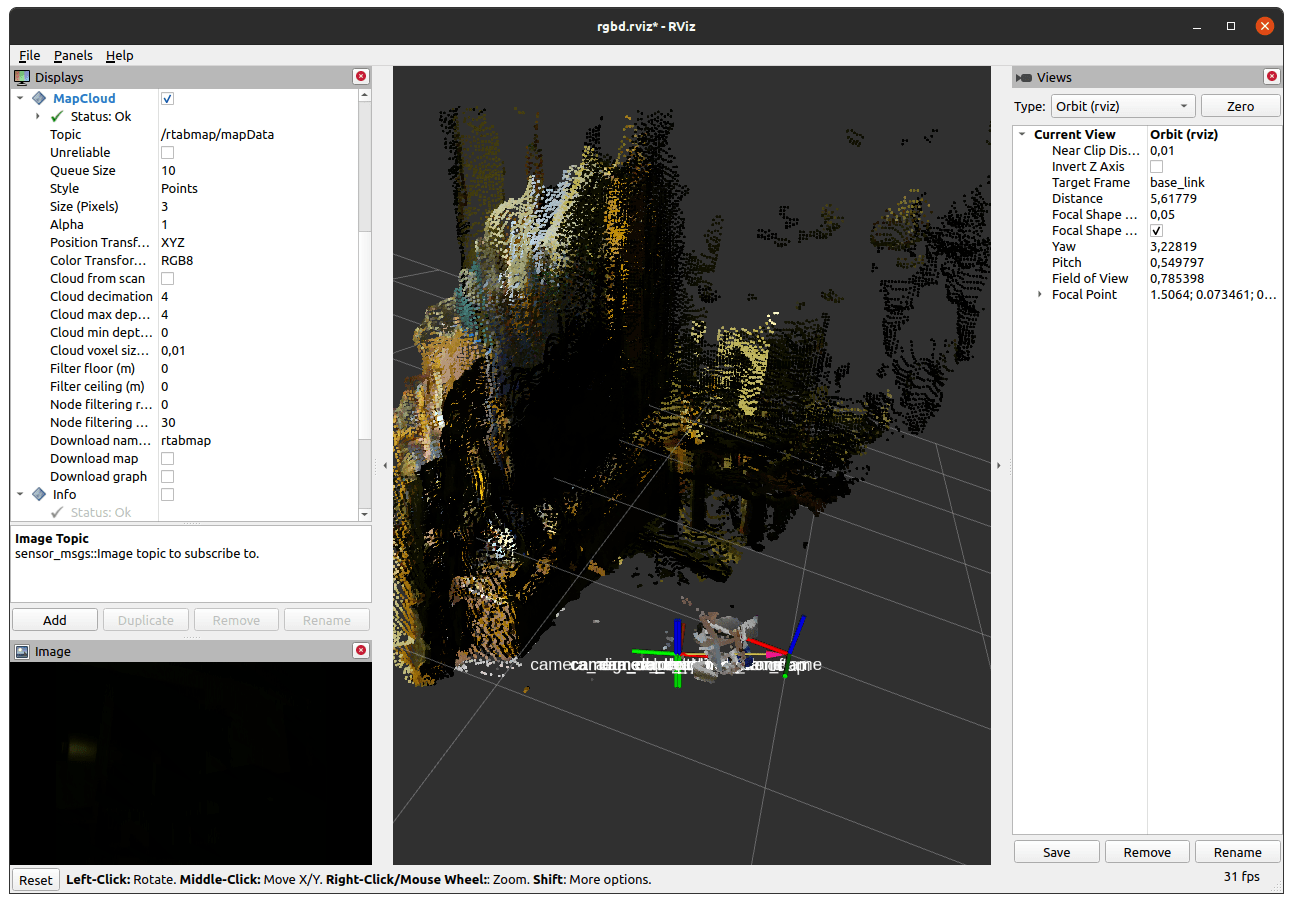
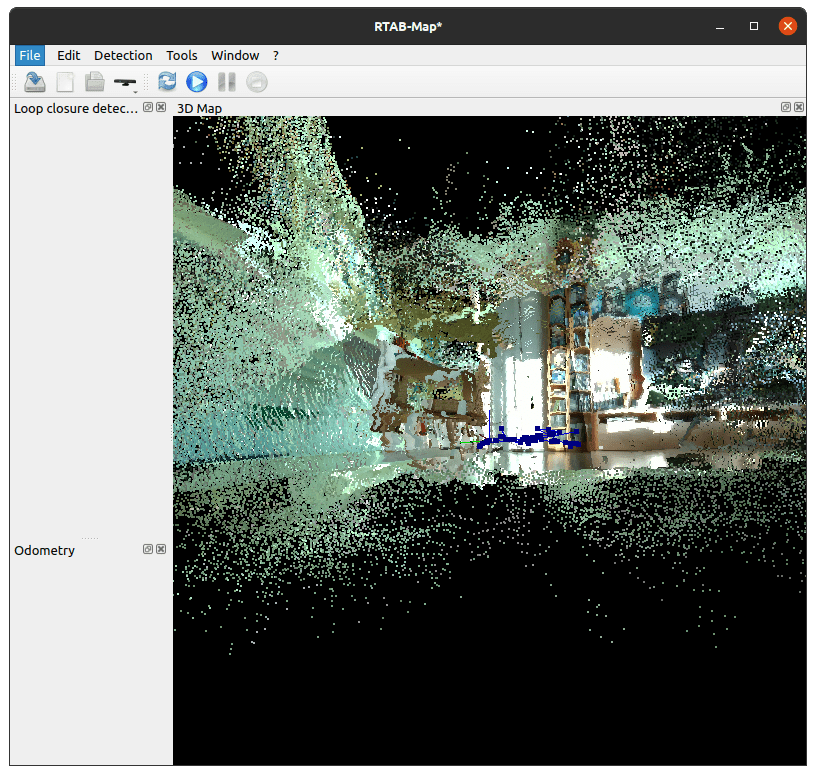
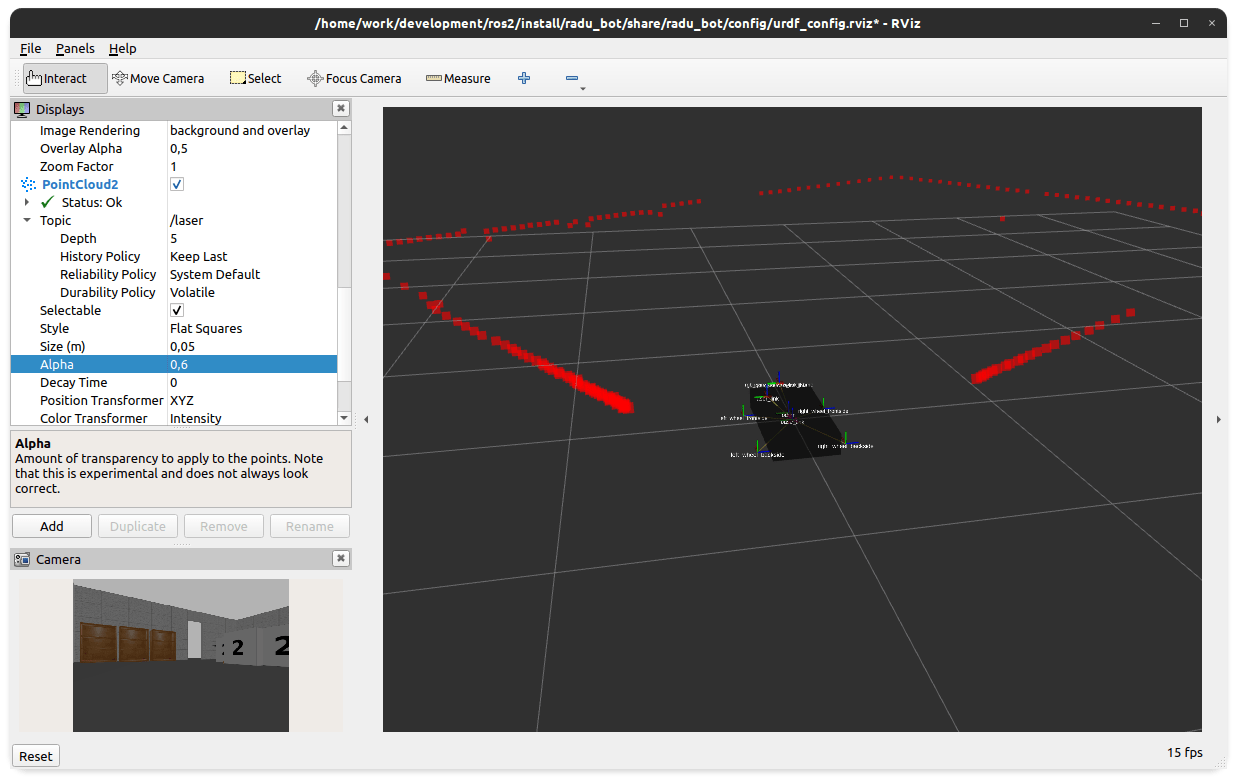
Building a moving robot will typically lead to adding visual sensors that enable the robot to inspect its surroundings and navigate. Visual sensors encompass ultrasonic sensors or laser scanners for distance measurements, LIDAR for a 360-degree laser scan image, cameras that provide RGB images, and sensors that provide complex point cloud. ROS supports all these sensors: Attach the correct plugin in RVIZ and Gazebo, start the hardware sensor, publish the correct topic and subscribe to its data.
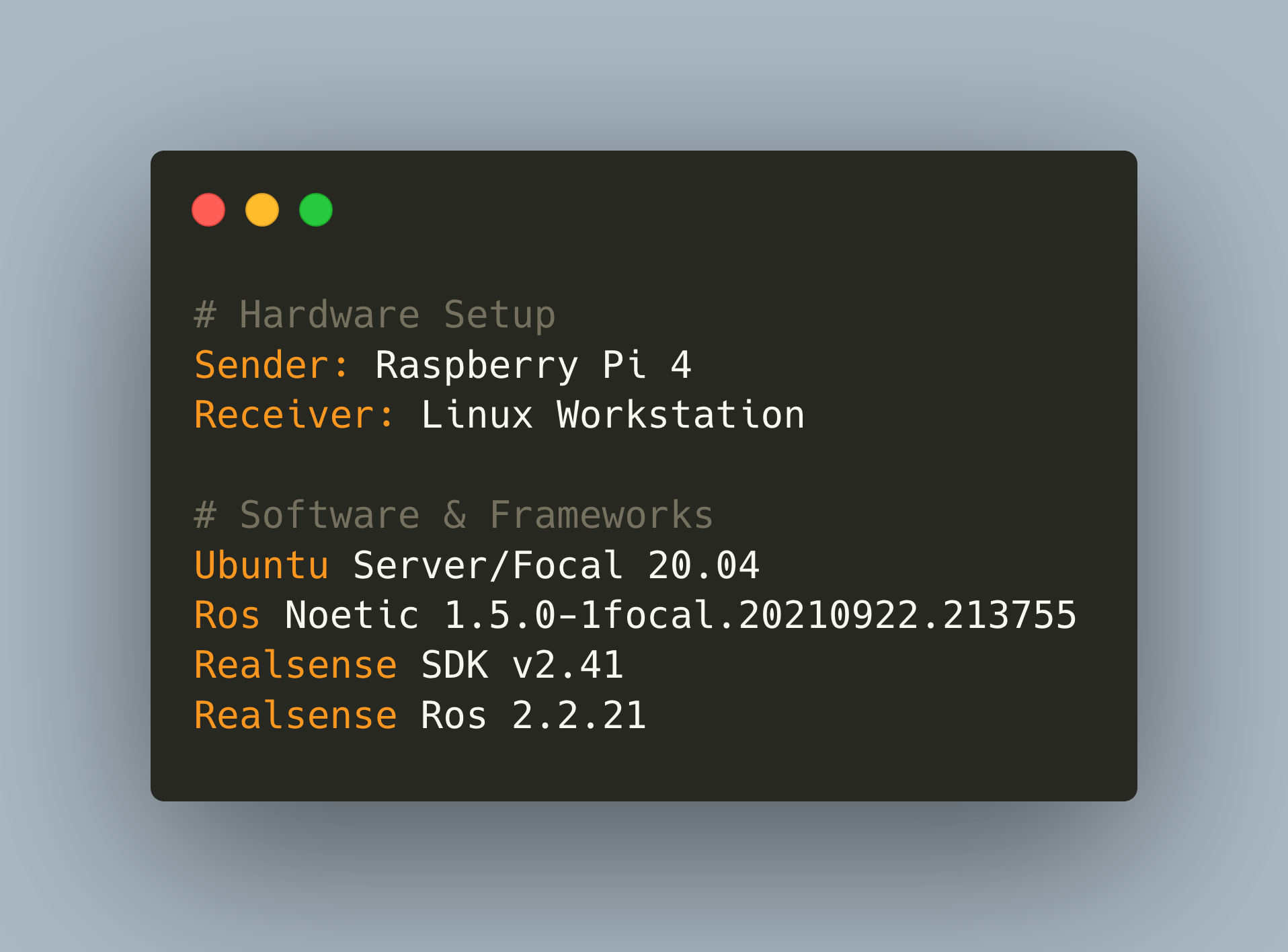
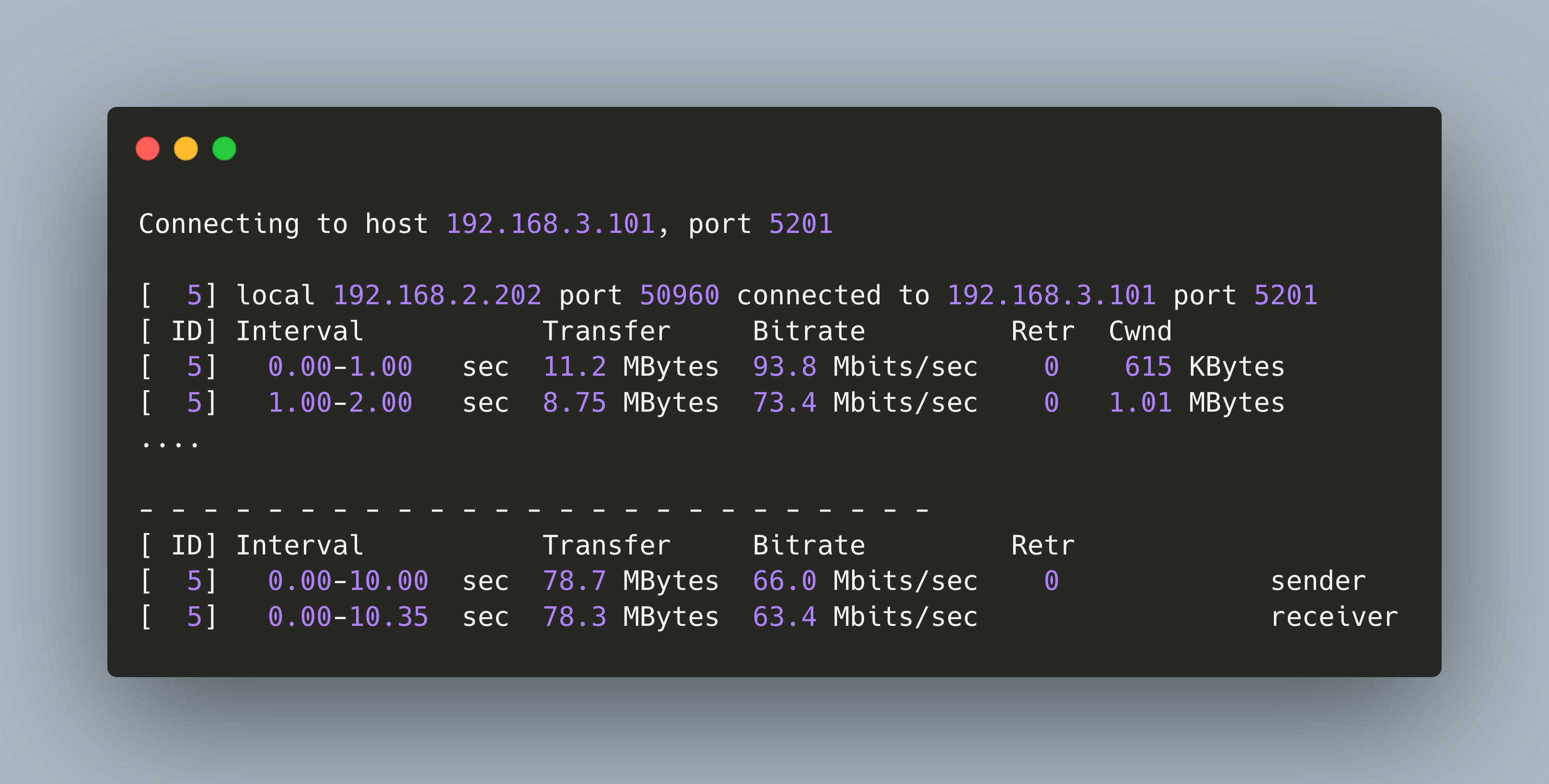
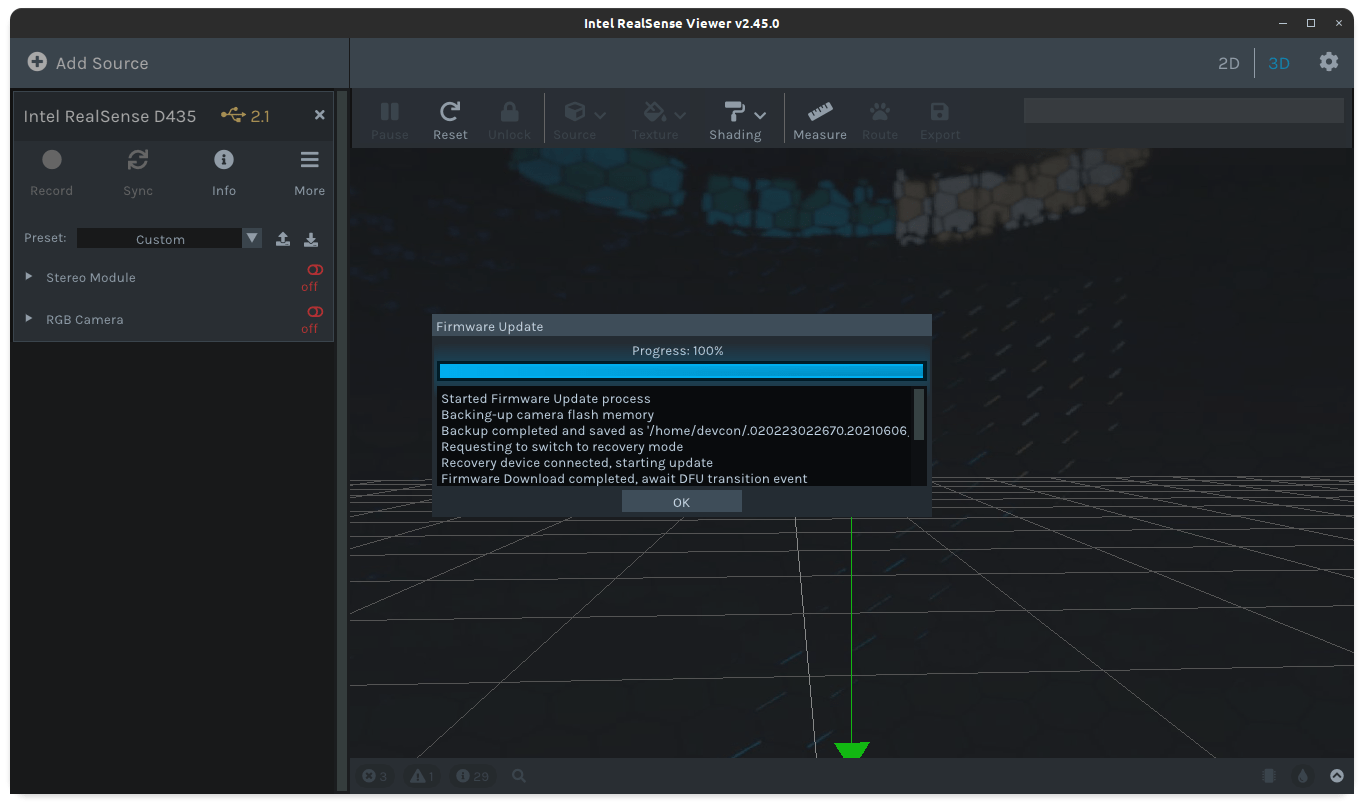
When using ROS on a small-scale computer like the Raspberry Pi, performance optimizations are very important. In the last article, I concluded an interesting experiment about network connectivity that resulted in a clear strategy: Use a dedicated 5Ghz Wi-Fi access point to connect your Raspberry Pi to your Workstation, and start the roscore node on the workstation. In this way, data streaming throughput, measures with `rostopic`, is best. This follow-up article continues the optimization for one area in which special constraints apply: The transportation of image data from camera and point cloud sensors. This article will teach you 4 optimization aspects: USB connection, ROS node parametrization, traffic shaping and using compressed data.
Robotic projects with ROS can involve multiple desktop/stationary computers and Single Board Computers that need to communicate. A very common communication protocol is Wi-Fi. When using this connection, you need to consider in which machine to start the ROS core node, which nodes publish topics, and which nodes subscribe to topics.
A self-navigating robot needs a model of its surroundings. For this, several visual sensors can be used. Following an earlier article about [an overview of visual sensors](https://admantium.com/blog/robo08_visual_sensors/), I decided to use the Intel Real Sense D435 camera. This RGB depth camera can provide stereo pictures and point cloud data, has a small factor, and is actively support by its manufacturer to provide support for the robot operating system.
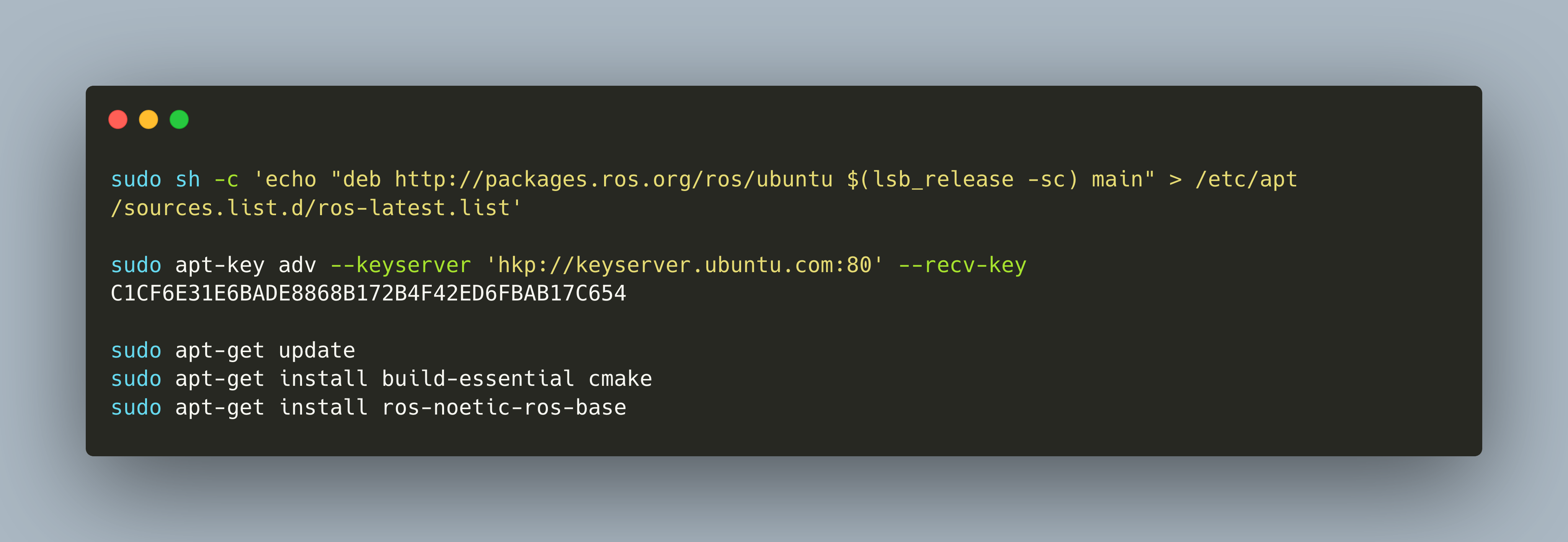
There are plenty of options for developing a mobile robot. And even plentiful are the requirements that you might want to fulfill. An overall goal in all setups should be to get the most up-to-date software running, starting from the OS to the OS packages and the application libraries.
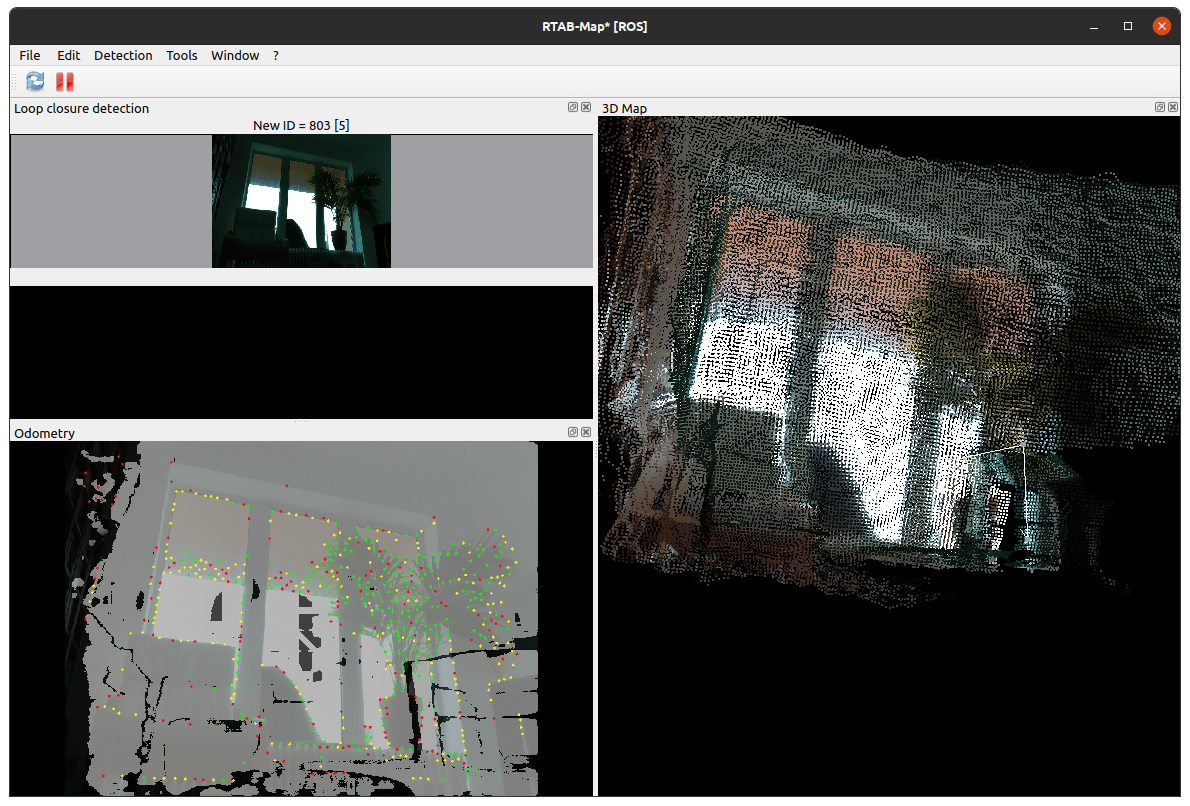
A robot can move by processing movements commands, blindly executing them until it hits an obstacle. In contrast to this, navigation is the ability to make autonomous choices how to move to reach a goal. Fpr this, a robot needs three distinct capabilities: First, to localize itself with respect to its surroundings. Second, to build and parse a map, an abstract representation of its environment. Third, the ability to devise and execute a path plan how to reach a designated target from its current location.
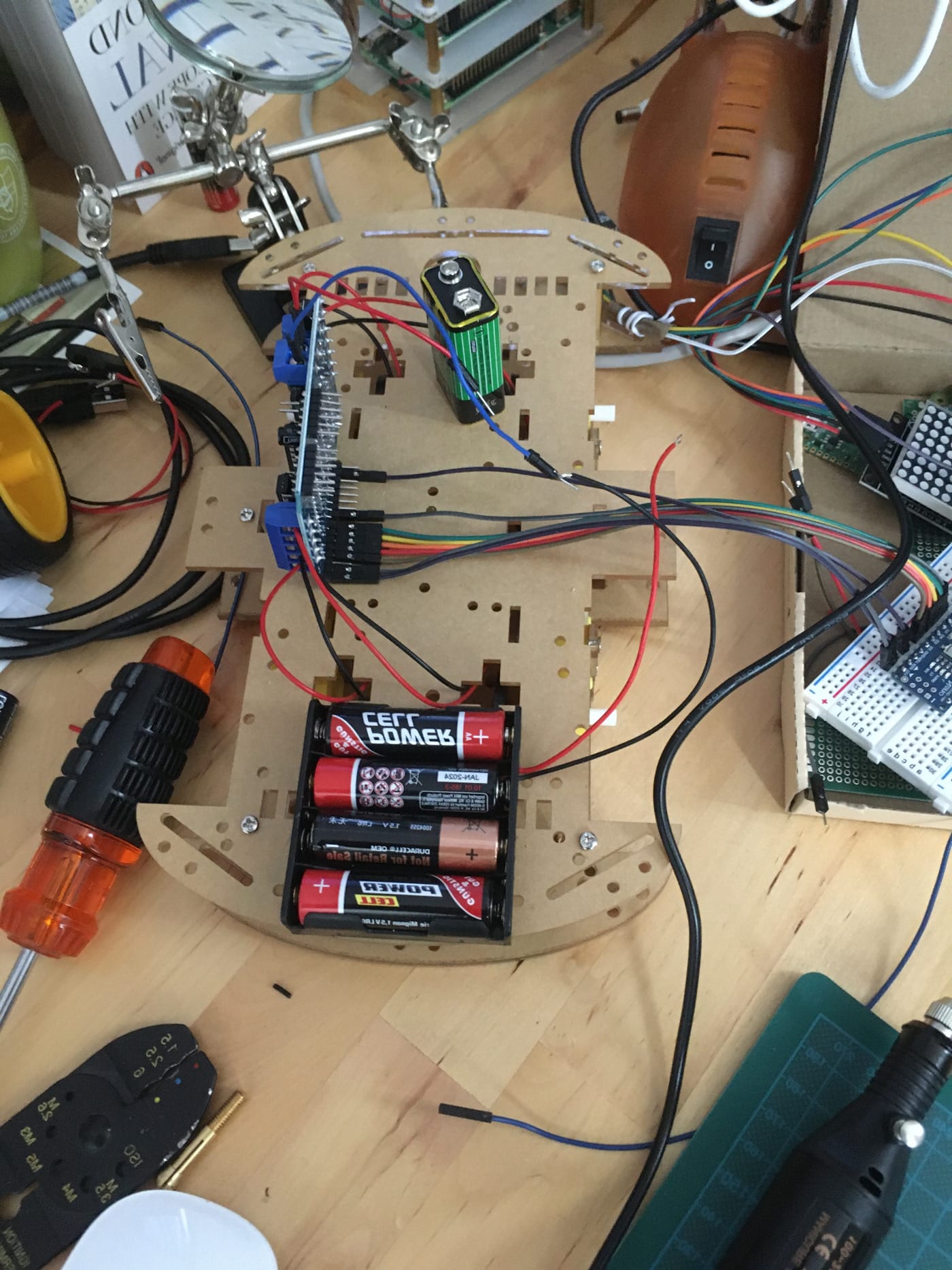
The development of my robot continues steadily. In the last post, I showed an immoveable box of the robot, which means a fully sensor equipped machine with the Raspberry Pi, the Arduino Nano, LED display and IR receiver. This box is now put on wheels so that it can move around freely.
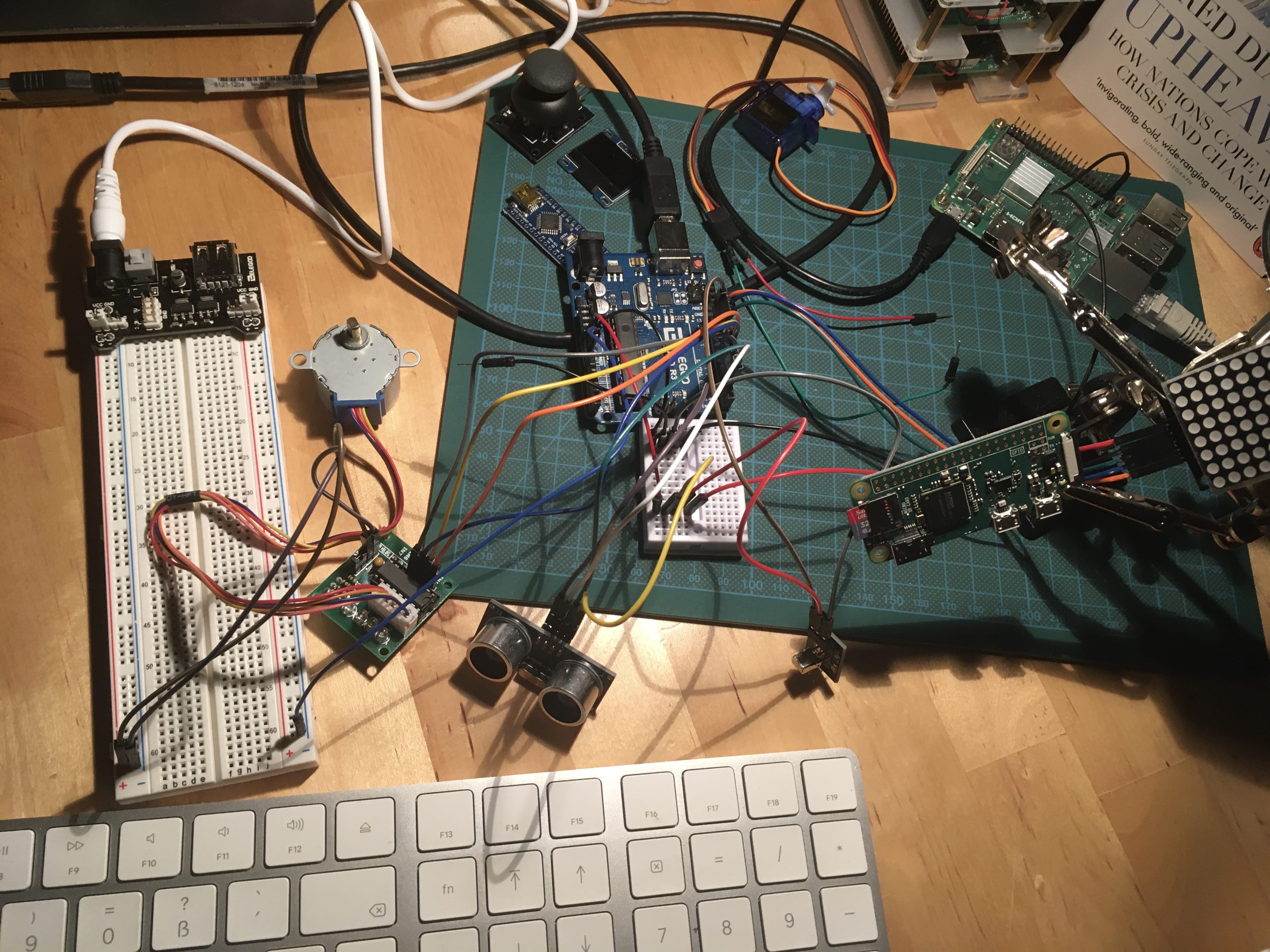
RADU is the code name for my robot project. In the last article of this series, I presented the bill of material, the type and number of items that I want to use in assembling the robots. Since this inception, I tried several sensors individually, and then gradually combined them.
To build a self-navigating robot in ROS, we need to understand the fundamentals of different aspects. The robot itself needs to be modeled in a way that transformations of its pose can be achieved. Also, the robot needs to listen and react to `Twist` data. And finally, it needs to continuously publish positional sensor data in the form of odometry messages.
The simulation of RADU in RViz and Gazebo is progressing well. In the last articles, we learned how to launch the robot and operate it with a teleop node. In this article, we will add two visual sensors. First, an image camera to see a live feed from the robot when it moves around. Second, a depth camera sensor, which outputs a point cloud, a distance measurement of the robots' surrounding in which the colors represent how far away objects are. These two sensors help in 2D navigation and 3D object recognition.